Foundation Repair in Redmond

When a Redmond homeowner notices something wrong at the foundation, the first job is to name it. Redmond Foundation Repair starts there: a basement wall that has split, a corner that has dropped, soil that stays wet beside the footing, a floor over the crawlspace that has lost its firmness. Each has its own repair, and some begin with an engineer.

Homeowners come first. Redmond’s homes are fairly recent, with a median build year of 1993, and foundation type varies from house to house, so a basement wall, a crawlspace floor and a slab each raise their own questions. We also work in Woodinville and Carnation.

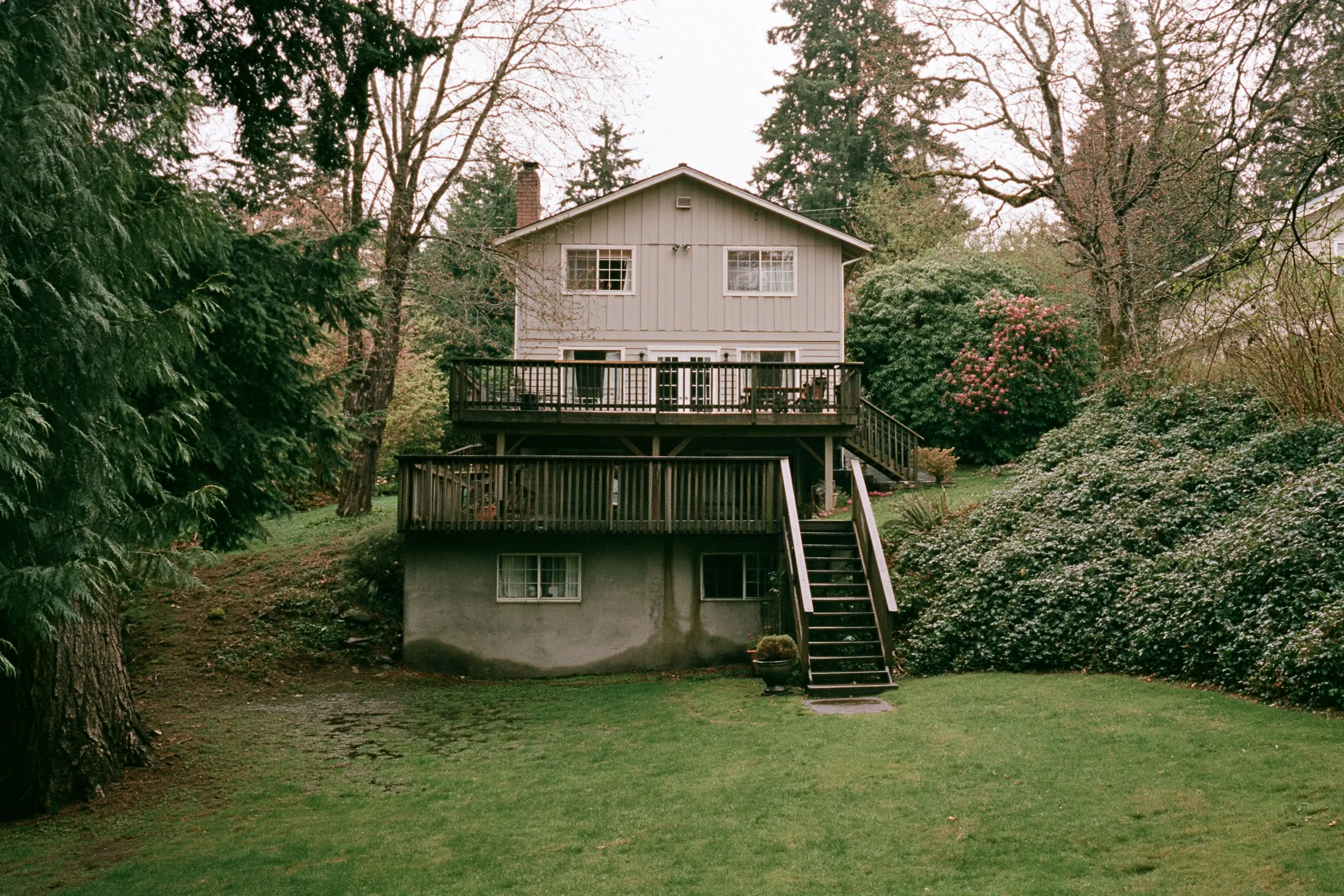
Rear of a two-story house on a gentle slope with a daylight basement, the poured concrete foundation wall showing at the lower level, a deck above and Douglas firs behind a lawn
Foundation Crack RepairFoundation Settlement and PieringFoundation DrainageCrawlspace Post and Beam Repair

Our foundation repair services

Close-up of a diagonal crack in a painted poured-concrete foundation wall, with moss at the soil line and a damp stain below the crackDrive head and torque motor on a small excavator beside a house foundation, with a steel helical shaft being turned into a narrow trench next to the footing

Foundation Crack Repair

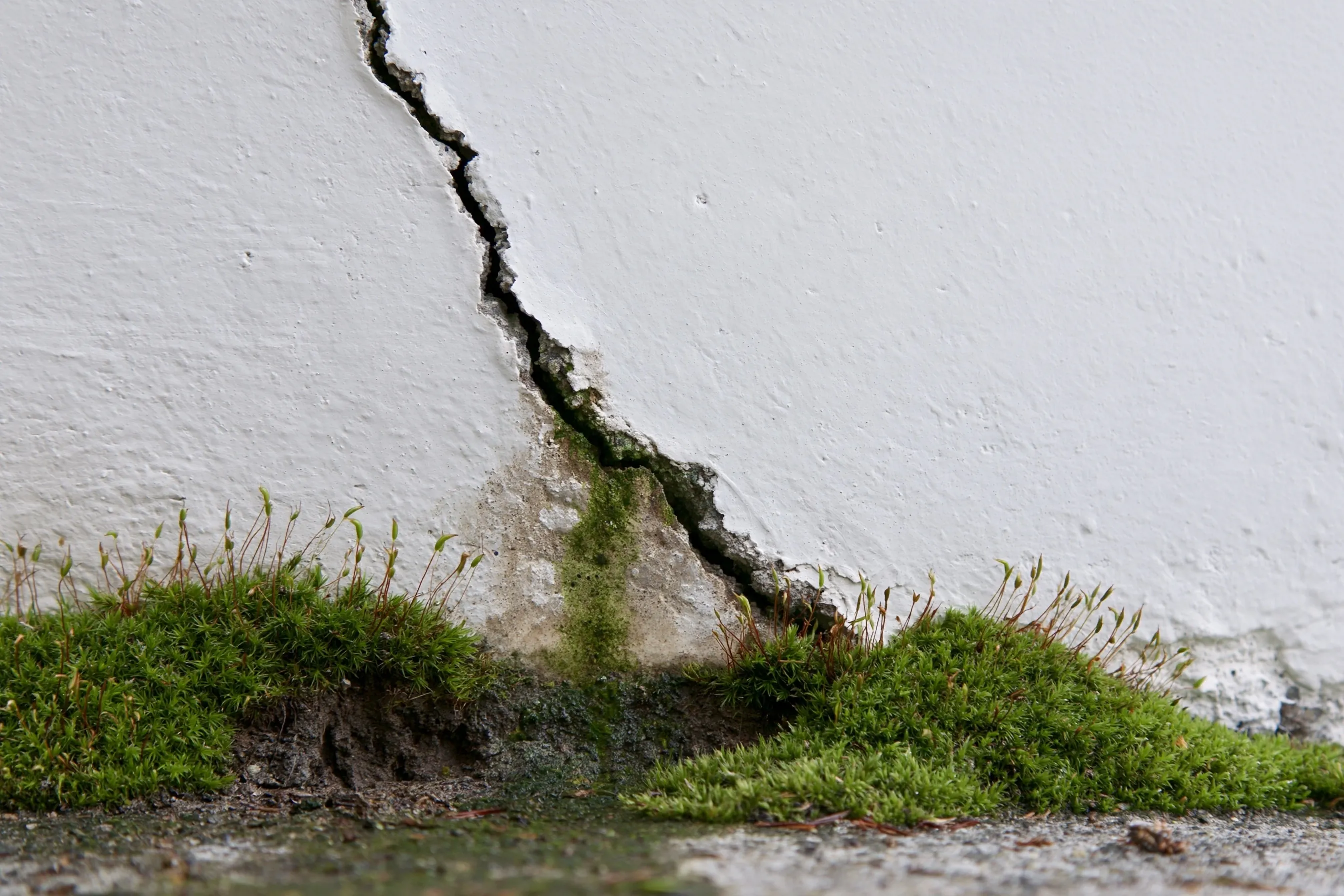
Concrete cracks for several reasons, and the shape of the crack says something about which. A hairline in a basement wall is a different matter from one that is wider at one end or runs sideways along a block wall. We work out which kind it is, seal what can be sealed and say plainly when an engineer should look first.

Foundation Settlement and Piering

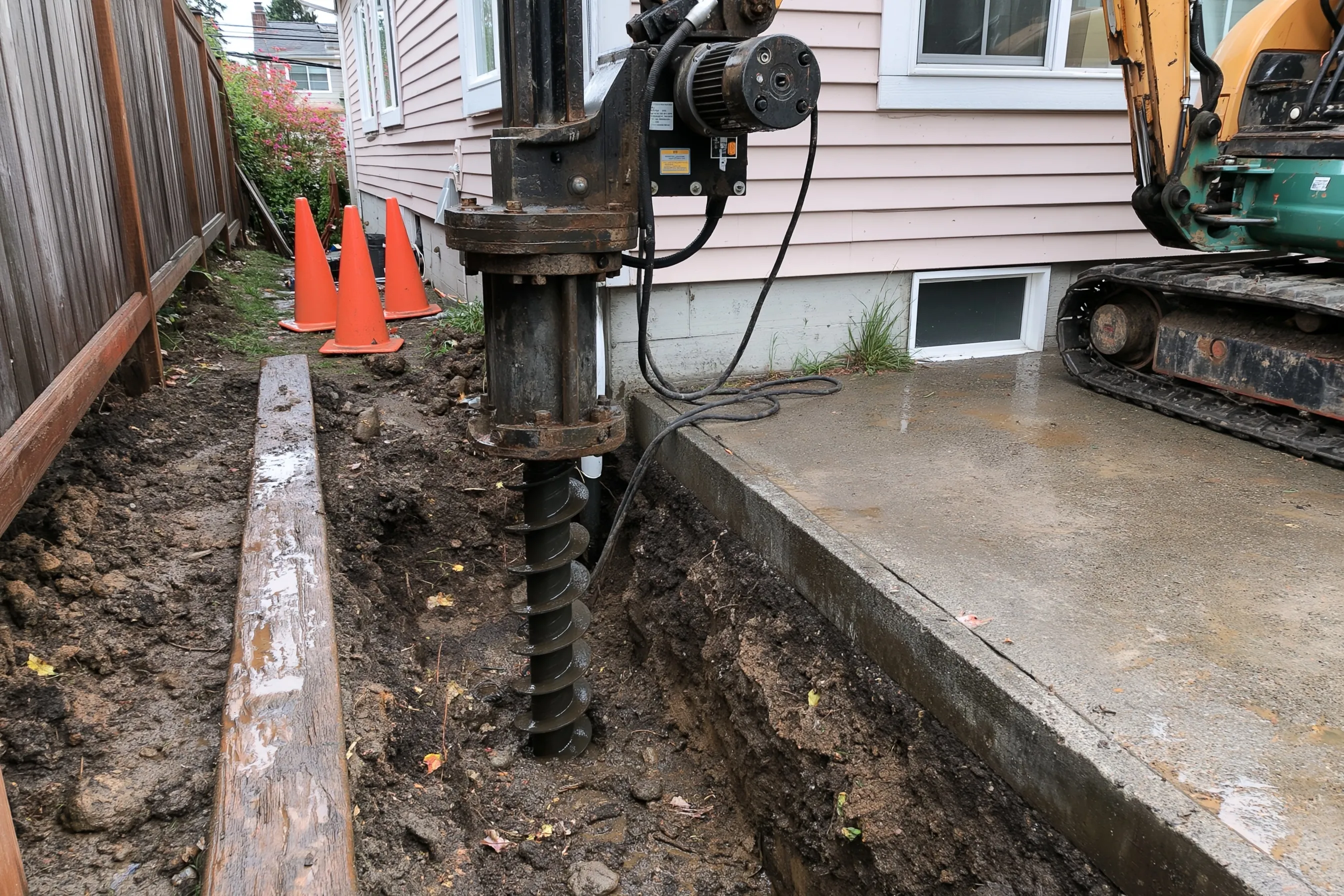
A corner that has dropped shows up as a sloping floor, a gap above a door or a crack that tapers. Steel piers are meant to carry a footing down to firmer ground, and each type has limits that depend on the soil under the house. We explain push piers, helical piers and underpinning, and we do not promise to bring a house back to level.

Narrow trench along the outside of a concrete foundation wall with a perforated drain pipe laid in washed gravel at footing level, beside a wet lawn and sword fernsLow view inside a crawlspace of a house: a row of timber posts on concrete pads holding wood girders and floor joists, with a vapor barrier covering part of the soil

Foundation Drainage

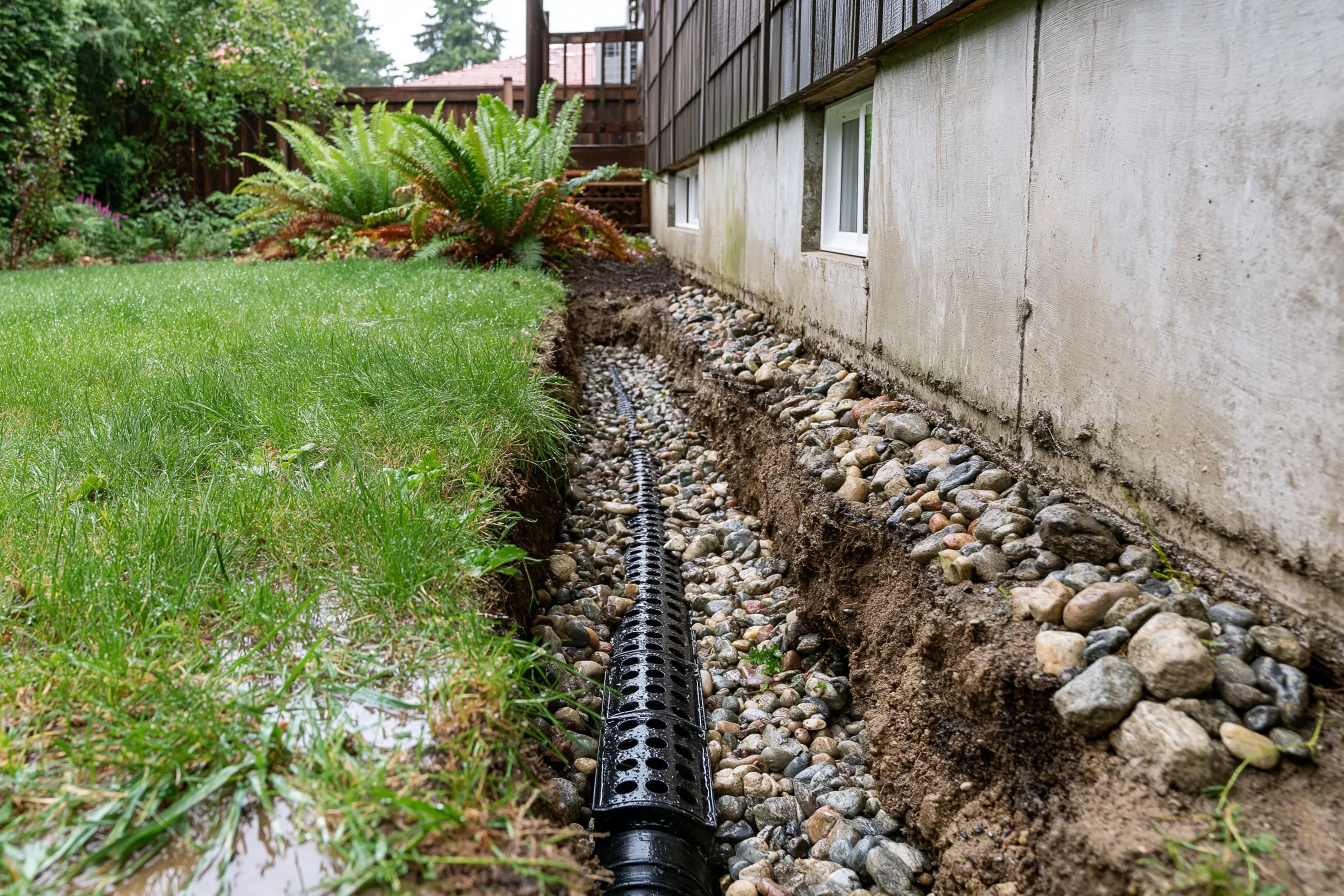
Wet soil beside the footing does damage two ways: it can carry fine soil away from beneath it and it can lean on the wall. The fixes run from gutters, downspouts and grading out to footing drains inside or outside the house, and an existing drain gets checked first, since it may be clogged or too small.

Crawlspace Post and Beam Repair

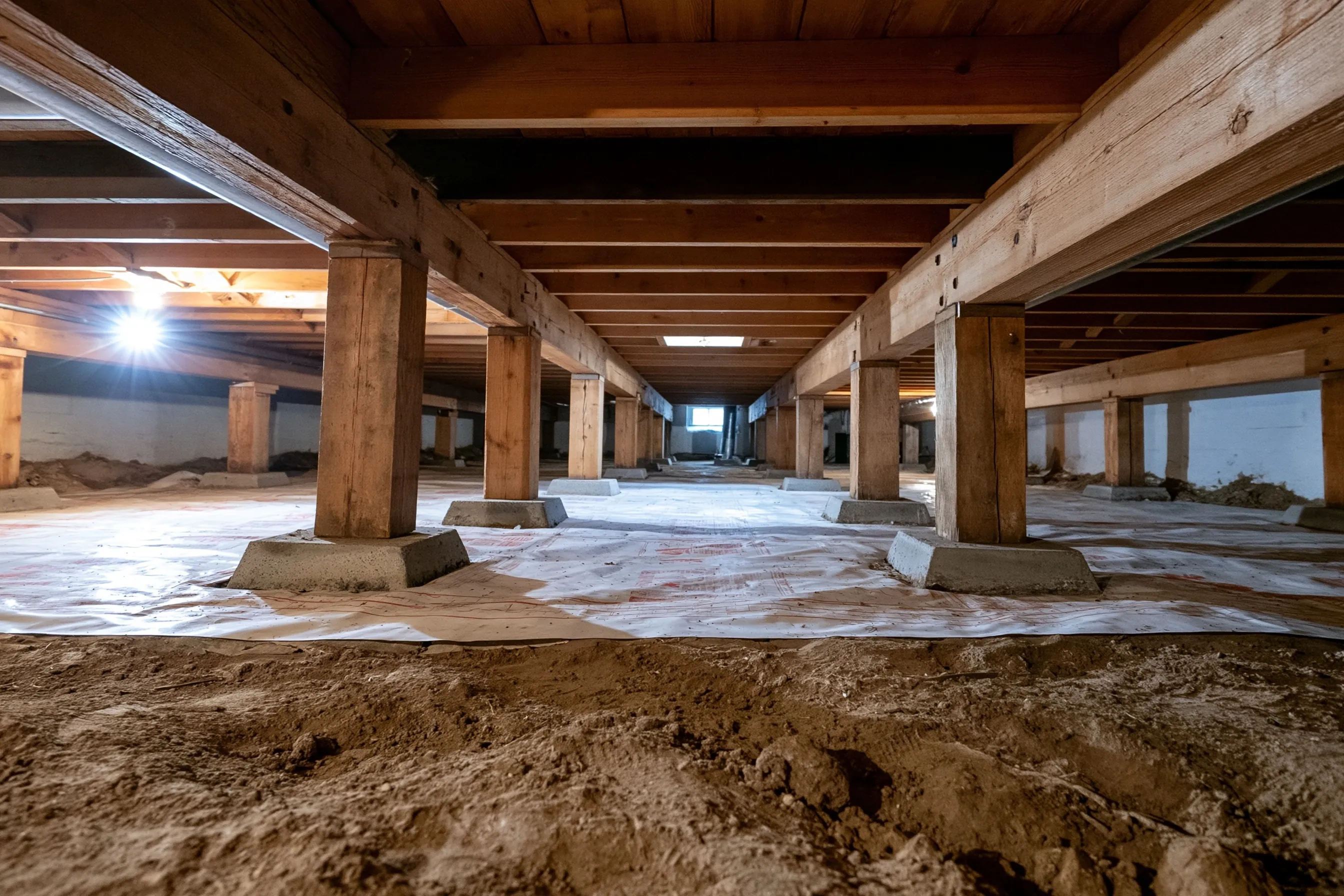
A bouncy or tilted floor over a crawlspace sends us under the house, to the posts, pads, girders and sill plate. Damp wood rots, so where the moisture comes from matters as much as the lumber. We replace and support what has failed; cracked walls and sinking footings belong to the other services.

Foundation repair costs

What follows is a set of 2026 estimates for labor and materials on foundation work in Redmond, Woodinville and Carnation. Piers, drains and posts are counted in typical numbers, so a job with more or fewer will cost more or less. Permit costs and any engineer’s design are left out. A plain job with room to work sits near the low end, and the open top end covers tight access, deeper digging and damage found once the area is opened.

Foundation crack repair

  • One crack, up to 10 feet$350 – $1,000+
  • Three to four cracks, each up to about 10 feet$1,200 – $3,500+
  • One wide or structural crack$900 – $2,500+
What is included

The work starts with what the crack is doing. Where injection suits it, the crack is sealed from the inside; a crack that is wide or growing is not simply filled.

Get a free quoteSee an example project

Settlement and piers

  • Per pier$1,800 – $3,500+
  • One corner of the house, 3 to 4 piers$5,500 – $14,000+
  • One side of the house, 6 to 8 piers$11,000 – $28,000+
  • Whole house, 10 to 14 piers$18,000 – $49,000+
What is included

A pier job ties a settled footing to firmer soil with steel. The plan sets the count and depth after the house has been seen, and says which parts need an engineer’s design or a permit.

Get a free quoteSee an example project

Foundation drainage

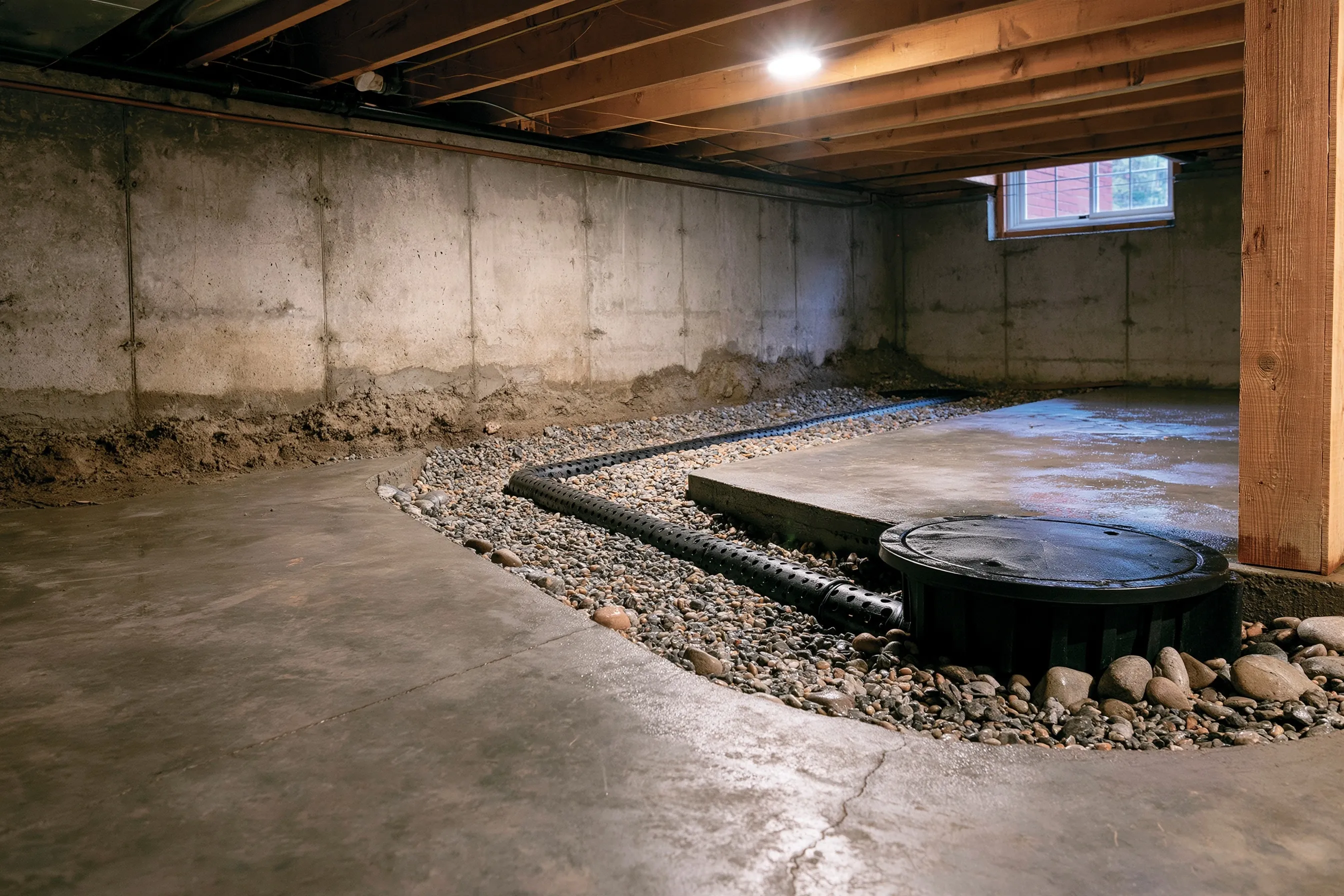
  • Inside drain along one wall, about 30 ft, no sump pump$1,500 – $3,800+
  • Inside drain around the whole perimeter, with a sump pump$7,000 – $18,000+
  • Outside footing drain, one side about 30 ft$3,000 – $4,000+
  • Outside footing drain, whole perimeter$12,000 – $16,000+
What is included

The drain goes where the water enters: a trench outside along the footing or a channel inside along the wall. It runs to a sump or a safe outlet.

Get a free quoteSee an example project

Crawlspace posts and beams

  • Replace one post$350 – $850+
  • Three to five posts$1,800 – $5,500+
  • New beam and posts under one room$3,000 – $9,000+
What is included

The work covers failed posts, pads and girders below the floor, with new supports on new footings. A damp crawlspace is checked at the same time.

Get a free quoteSee an example project

Ranges are 2026 estimates, not quotes. Your written estimate is free and comes after we have seen the foundation.

Signs your foundation needs a look

Use the list as a prompt, not a diagnosis. HUD’s inspection guide says shrinkage cracking is rarely serious, and a Minnesota extension page notes that concrete and block foundations usually end up with some. Signs that deserve a second look:

  • A crack that is wider at one end than the other
  • A crack running sideways along a block or brick wall
  • A floor that slopes, or a gap opening above a door or window
  • Doors and windows that rub or no longer close
  • Wet soil, standing water or damp along the foundation
  • Soft, dark or crumbling wood under the house, or floors that bounce

Write down where each sign is and the date. Photograph a crack with a coin beside it, and photograph it again in a few months; the pair shows whether anything moved. Settlement tends to build slowly, HUD says, rather than arriving as a sudden event. A wall that is visibly leaning or ground that is sliding is another matter, and worth having looked at promptly.

When an engineer is involved

Redmond’s permit staff can say whether a given repair calls for an engineer. HUD, in federal guidance rather than a city rule, points to a structural or geotechnical engineer with experience in this work for the cause of settlement, and to a professional engineer overseeing the contractors.

Two Washington licensing rules sit near this topic and differ from each other. Contractors register with the Department of Labor and Industries, and advertising or working without registration is a gross misdemeanor. Engineers, separately, must be registered to practice engineering in the state. Whoever you hire, look up their L&I registration before work begins.

Foundation repair in Redmond homes

Redmond’s housing stock is recent. About 26 percent of homes date from before 1980 and fewer than 2 percent from before 1950; roughly a third went up between 1980 and 1999 and about 40 percent in 2000 or later. The median year is 1993. Just 44 percent of homes are one-unit houses, the rest being attached or multi-unit buildings, and the median owner-occupied home is valued near $1.17 million.

Foundation and crawlspace framing vary from house to house, and a look at the basement wall or through the crawlspace hatch shows what a given house has. About 23 percent of Redmond homes date from 1960 to 1979. Nothing in these figures describes any single house, and a house of any age can need any of the four services.

Permits and hazard areas in Redmond

Redmond’s handout on geologic hazard areas, dated 2011 and so worth checking against the current zoning code, sorts them into erosion, landslide and seismic areas. It describes landslide hazard areas as including any area with a slope of 40 percent or steeper and 10 feet or more of vertical relief, and seismic hazard areas as lands at severe risk from earthquake shaking, slope failure, settlement, liquefaction or surface faulting. It points to the city’s critical areas maps on redmond.gov/zoningcode, and says that for landslide hazard areas alteration is prohibited except for installation or construction of streets and utilities adopted as part of a City plan. Where alteration is permitted, it says a study by a qualified consultant such as a geotechnical engineer or geologist is part of the application.

Permits and licensing are separate matters. The city’s miscellaneous building permit packet says contractors must obtain a City of Redmond business license before working in the city; that is a business license and not a building permit. The same packet covers retaining walls, among other items, and for the permit types it lists asks for drawings and calculations stamped by a Washington State engineer. Redmond’s FAQ treats even a minor remodel such as removing a wall as an alteration that needs a permit. Whether a given repair needs a permit depends on current city rules, so confirm with the Redmond permit center before work is scheduled.

Our process

01

Look at the house

We start with the symptoms and where they are: the cracks, the floors, the doors, the crawlspace and the ground around the foundation. Photos you send beforehand help the first conversation.

02

Find the cause

The cause decides the repair. Water, soil, framing and the original foundation each lead somewhere different, and some of these questions go to an engineer before a contractor.

03

Plan the repair

The plan names the method, what it is meant to do and what it will not do. If the city requires a permit or the lot is in a mapped hazard area, that is sorted out here.

04

Do the work

The work is done to the plan, with the house, utilities and landscaping protected as far as the job allows.

05

Clean up and follow through

The site is cleaned, and we explain what to watch: new cracks, damp spots and anything that changes. Photos taken before the work give you a baseline.

What changes the cost

The listed ranges are a rough guide, because the cost follows what the foundation turns out to be doing. A visit to the house comes before the written estimate. The price moves with these:

  • Whether the problem is one crack or a moving foundation
  • How many cracks, piers, posts or feet of drain the job involves
  • Access to the work: tight crawlspaces, finished basements, decks and sloped yards
  • Digging and spoil removal, and what sits on top of the ground to be opened
  • Soil and water conditions at the footing
  • An engineer’s report or a city permit, where one is needed
  • Finish work afterward, such as drywall, paint and landscaping

Service area

Redmond is the main service area. Woodinville, and Carnation in the Snoqualmie Valley, are covered on pages of their own, each under a separate permit office. Ask about other nearby addresses.

Frequently asked questions

How much does foundation repair cost?

It depends on what is wrong. A sealed crack, a set of piers, a footing drain and new crawlspace supports are four different jobs, and access, digging, soil conditions and permits shift each price. Take the ranges as a rough guide: a visit comes first, then the written estimate, and the cost list above shows what drives it.

Is it better to fix a foundation crack from the inside or the outside?

It depends on the crack and on where water gets in. Whichever side the repair is made from, a crack that is moving needs its cause found first.

What time of year is best for foundation repair?

Rain and saturated ground make digging harder in the wet months, and the work plan can account for that, so ask when you get the quote.

Can you live in the house during foundation repair?

It depends on the work. A crawlspace job and a drain along the outside may leave the house in use, while a job that opens a finished basement may not. Ask what will be shut off, for how long and whether utilities are affected.

Will insurance pay for foundation repair?

Ask your insurer before work begins: the policy and the cause of the damage decide whether anything is covered. Keep dated photos.

Is a foundation crack worth fixing?

Check the type of crack first. Per HUD, shrinkage cracks are rarely serious, and minor settlement cracks matter mainly if moisture gets through. Cracks that widen, taper or leak deserve action.

Request a free foundation repair quote

Describe what you are seeing and where: a crack, a sloping floor, wet ground at the footing, soft floors over the crawlspace. We'll get back to you soon with an estimate or any questions we have. Estimates are free and there's no obligation.

Call (425) 534-7222

Call (425) 534-7222