A house that may be settling shows it in small ways: floors that run downhill, a corner that has dropped, doors that stick, cracks that taper. Redmond Foundation Repair explains here what settlement means, how push piers, helical piers and underpinning differ, and where each stops being the right answer.
We serve Redmond and the nearby towns of Woodinville and Carnation. Redmond has a median build year of 1993 and about 44 percent of its homes are one-unit houses. Settlement can happen in a house of any age, and the soil under a lot matters more than the year it was built.
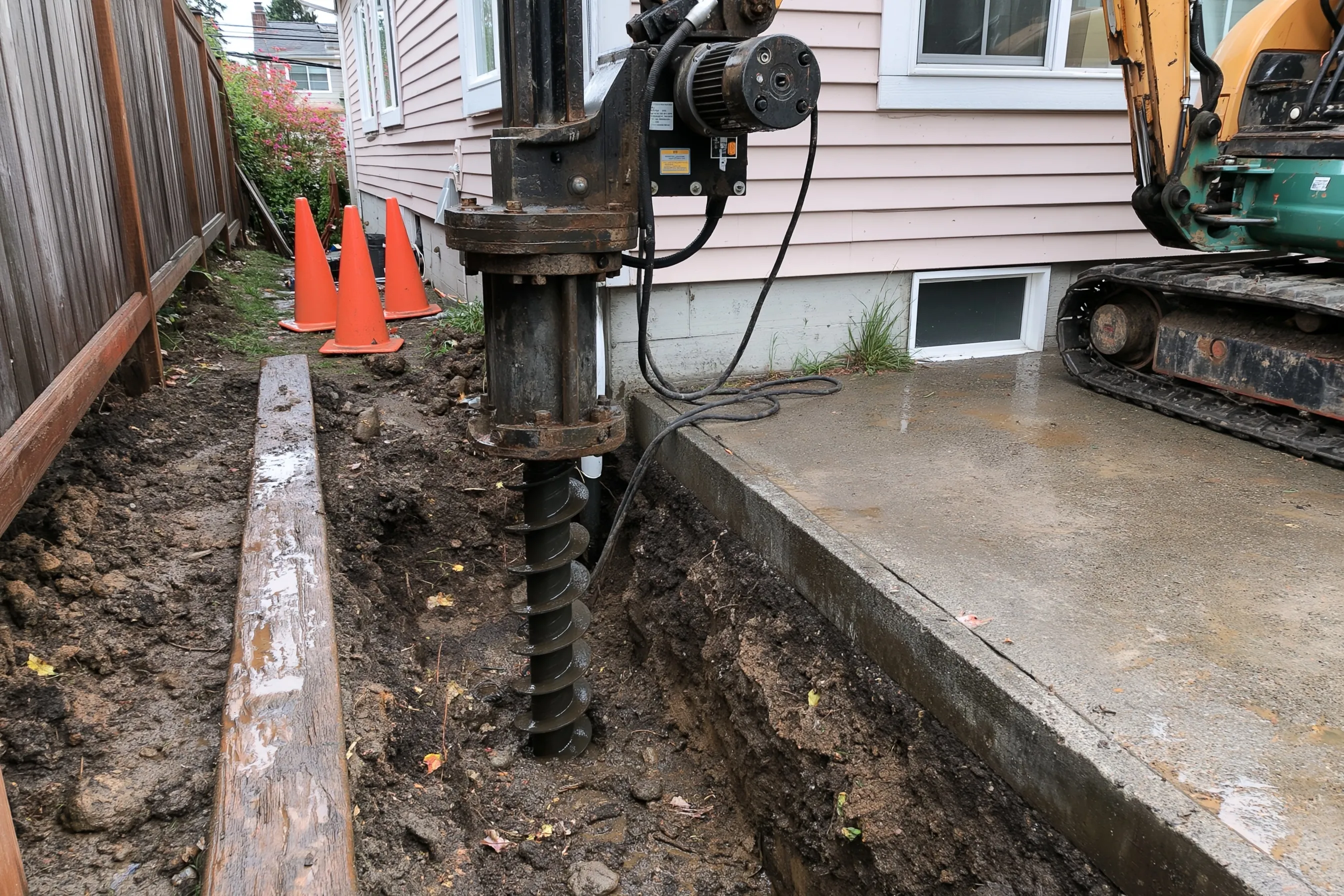
Push piers: HUD’s term is mini-piers. Narrow steel sections (2 to 8 inches across, small ones typical for houses) go down beside the footing under hydraulic force until rock or adequate bearing stops them, and the house’s own weight supplies the reaction. Drawbacks, per HUD: possible cracking of foundation and slab if misapplied, and a bearing layer that must be fairly shallow.
Helical piers
HUD says helical piers will not work in soil of limited bearing capacity, so the soil at the lot decides, and a geotechnical investigation is how that is known. The piers themselves are a steel shaft with a helical plate, screwed into stable soil and attached to the footing with a bracket, and the torque logged on the way down reveals real bearing capacity.
Underpinning
Underpinning is the heavy option: a bigger footing built under a wall that has settled. HUD calls for an engineer’s design matched to the soil in place, describes the work as dangerous and for experts, and cautions that silty or expansive soils may defeat it.
Signs a house is settling
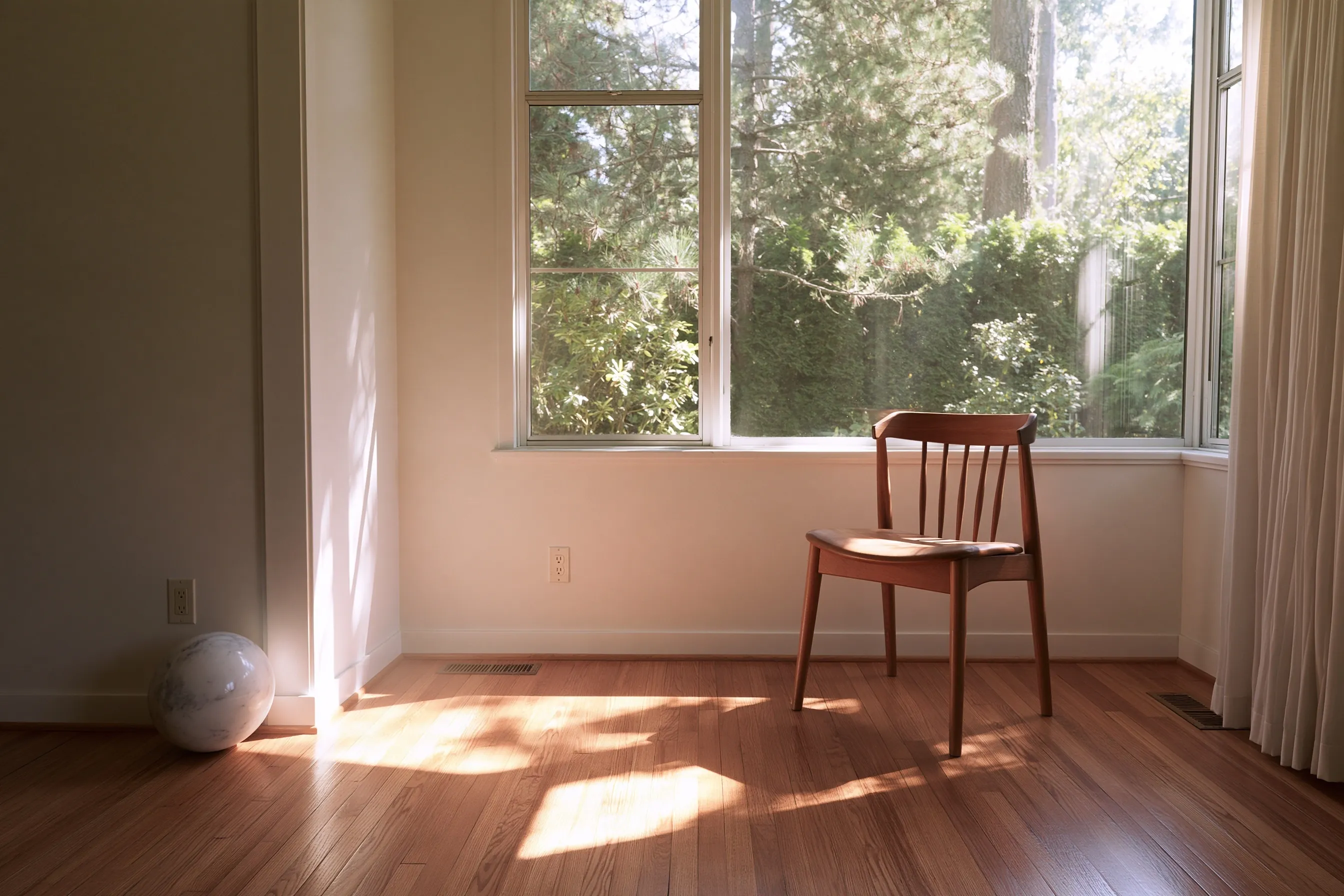
The signs are a floor sloping toward one side, gaps above doors and windows, doors that rub, cracks at the corners of openings, and cracks that taper. To describe them for an engineer or a contractor, mark where each is and when you noticed it, take a photo with a coin or ruler beside any crack, and put a level or marble on the floor and note the direction.
HUD describes settlement as gradual rather than dramatic, leaving time to prepare a proper fix and to study the cause carefully. That fits ordinary settlement. When a wall is leaning or the ground is moving, have it looked at promptly.
What goes wrong under a house, according to HUD: the site itself, soft or organic ground (peat, silt, uncompacted fill), earthquakes, water moving through the ground or flooding, and poor design or materials. Water adds a second harm, taking fines out from under footings.
Washington DNR’s Bulletin 78 counts peat deposits in 28 of 39 Washington counties and says peat settles heavily under loading and drying. Which lot has peat, silt or fill takes a soils investigation.
Piers are meant to carry the footing on firmer ground and help stabilize a settling foundation; returning the house to level is not promised. Of one pier method HUD says that raising a foundation more than a few inches is difficult, and of push-style piers that they can crack the foundation and slab if used incorrectly.
Water belongs to the diagnosis. If water has been washing soil out from the footing, a pier without drainage work leaves the cause in place, and the foundation drainage page covers that side.
HUD says to consult an engineer about the cause of settlement and to have repairs directed by a professional engineer. Washington’s engineering registration law is separate, and it does not by itself say a particular repair needs an engineer. Redmond’s FAQ treats minor remodel work as an alteration that needs a permit. Call the permit center before work is scheduled to ask whether piering or underpinning needs one.
Redmond’s hazard handout describes seismic hazard areas as land at severe risk from earthquake shaking, slope failure, settlement, soil liquefaction or surface faulting, and says that where alteration is permitted, a study by a qualified consultant such as a geotechnical engineer or geologist is part of the application. DNR’s Geologic Information Portal has a natural hazards view that includes landslide hazards and earthquake ground response, liquefaction among it.
The number of piers is the main driver, and it is set by the engineer or the plan and not by a rule of thumb. Depth to firm soil, access beside the foundation, digging, bracket and pier type, an engineer’s report, any permit, and finish work such as concrete, landscaping and interior repair all change the price. It is quoted after the house has been seen.
What Redmond lots and rules add
Redmond’s median home dates from 1993 and about 23 percent were built from 1960 to 1979. Foundations of both ages can settle, and the soil, the water and the original footing count for more than the year. Before digging beside the footing on a sloped lot, check the city’s critical areas maps.
The contractor business license Redmond asks for is a separate matter from a permit and from state registration, so ask for all of them.
Look for floors that slope, gaps above doors and windows, doors that rub and cracks that are wider at one end. Photos with dates and a level on the floor give an engineer something to work from.
Are push piers or helical piers better?
The soil and the load choose between them. According to HUD, push-style piers pay off where firm material lies near the surface, while helical piers will not work in soil that cannot bear enough. An engineer’s advice helps.
Will piers lift the house back to level?
We do not promise it. Piers are there to carry the footing on firmer ground, and what that does for the floors depends on the house. Ask any contractor, in writing, what outcome they are committing to and what they are not.
Tell us what you have noticed: sloping floors, door gaps, corner cracks, and whether any of it has changed. We'll get back to you soon with an estimate or any questions we have. Estimates are free and there's no obligation.