How a crack gets sealed
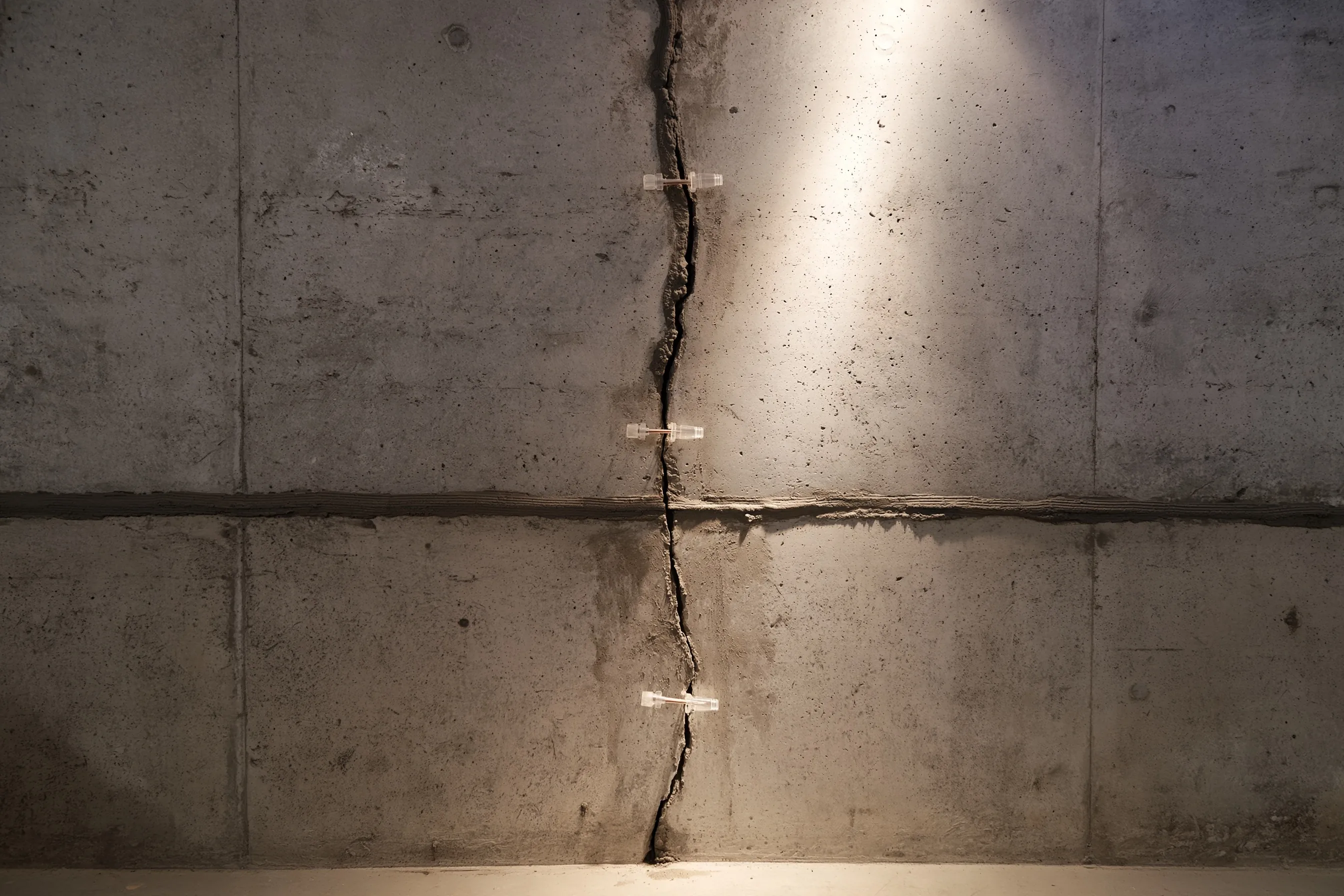
Sealing is done from the face of the wall. One approach fills the crack with an injected material through small ports set along it, then the surface is closed. Another covers the face with a sealer. Which suits a crack depends on its width, whether it moves and which side of the wall can be reached.
Know the limits. HUD says waterproofing coatings can bridge cracks only up to 1/16 inch and only if they are nonstructural; that describes the coating, not a way to tell whether a crack is structural. Nothing here promises a sealed crack stays closed or a wall stays dry, since a wall that keeps moving can reopen the seal.
Water and movement behind the crack
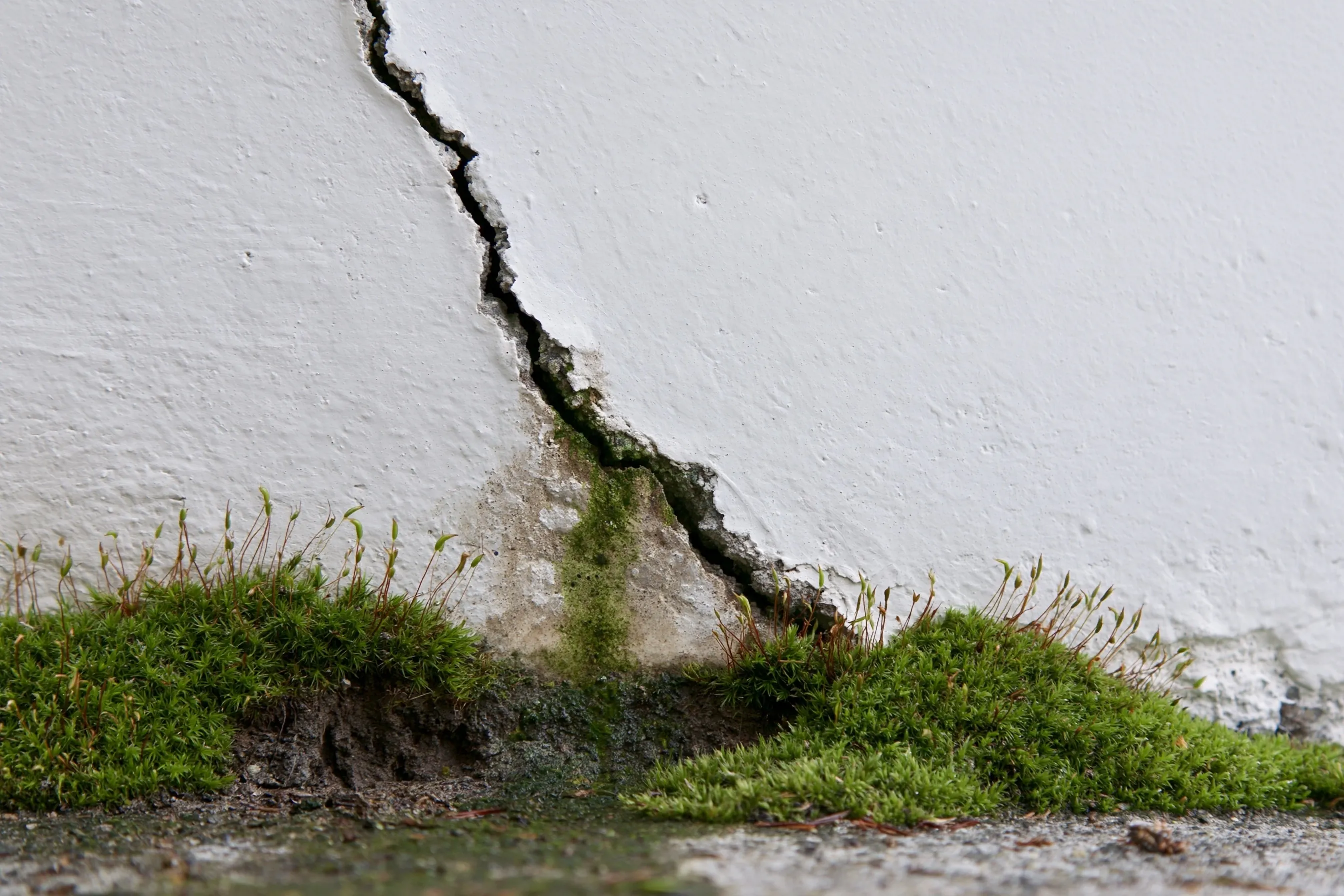
Look for water first. In HUD’s inspection guide, minor settlement cracking becomes a structural problem only if moisture keeps leaking through the crack and damages the building. Outside the wall, water can also take soil from under the footing and press against the wall. Gutters, grading and footing drains are on the foundation drainage page.
There is a framing angle too. Where floor joists are not properly tied to the foundation wall, the wall can move, and a Minnesota extension page says cracks can then be severe. From the crawlspace or basement, look at how joists meet the top of the wall.
When to ask an engineer
Wide cracks, growing cracks, horizontal cracks and cracks that come with sloping floors or sticking doors are worth an engineer’s look before anyone quotes a repair. HUD’s foundation guide says a structural or geotechnical engineer should be consulted about the cause of settlement. That is federal guidance rather than a Washington permit rule.
If the crack is a hairline in the middle of a wall, with no water and no change over several months, a sealing job may be all the wall needs. The photos and dates you keep make that call easier.
What changes the cost
Price follows the number and length of cracks, whether they can be reached from inside, whether the outside must be dug open, the wall material and whether water is coming through. A crack that turns out to be part of a settlement problem is priced as that problem, and it is quoted after the foundation has been seen.
What Redmond lots and rules add
Redmond’s handout on geologic hazard areas describes landslide hazard areas as including any area with a slope of 40 percent or steeper and 10 feet or more of vertical relief, and says the city’s critical areas maps show landslide, seismic and erosion areas. A steep lot with a cracked retaining or foundation wall is worth checking against those maps before digging begins. For landslide hazard areas the handout says alteration is prohibited except for streets and utilities adopted as part of a City plan. The handout is dated 2011, so confirm against the current zoning code.
The city’s permit staff, not a handout, decide whether a given repair needs a permit. Ask the permit center whether a crack repair needs a permit.
If the floors slope as well as the wall cracking, movement may be the issue, and foundation settlement and piering deals with it. The Redmond Foundation Repair home page also links drainage and crawlspace framing.