
Surface water
Grading comes first, per HUD: surface water must be led away from the building. A Minnesota extension page also lists missing or poor gutters and downspouts, and absent or failed subsurface drainage, as causes of wet basements.
Typical cost in Redmond
Damp crawlspaces, wet basement walls and soil that stays soggy beside the footing all point to water, and Redmond Foundation Repair deals with where that water comes from and where it should go. This page covers sources, footing drains and the cheaper first steps.
Redmond homes run about 40 percent from 2000 or later, with a 1993 median and roughly 26 percent before 1980. A drain that has been in the ground thirty years may be clogged or undersized, though a house’s age alone does not say so. We also work in Woodinville and Carnation.
Grading comes first, per HUD: surface water must be led away from the building. A Minnesota extension page also lists missing or poor gutters and downspouts, and absent or failed subsurface drainage, as causes of wet basements.
Where soil beside the footing stays wet, water pushes on the wall. HUD lists three kinds of harm: fine soil washed from under foundations, loss of soil cohesion that allows settlement, and hydrostatic pressure on walls and floors that can produce cracks and movement.
HUD cautions that an existing footing drain may be too small or not working. A house with a drain already in the ground can still have a wet crawlspace, so the first question is whether that drain works, before digging another.
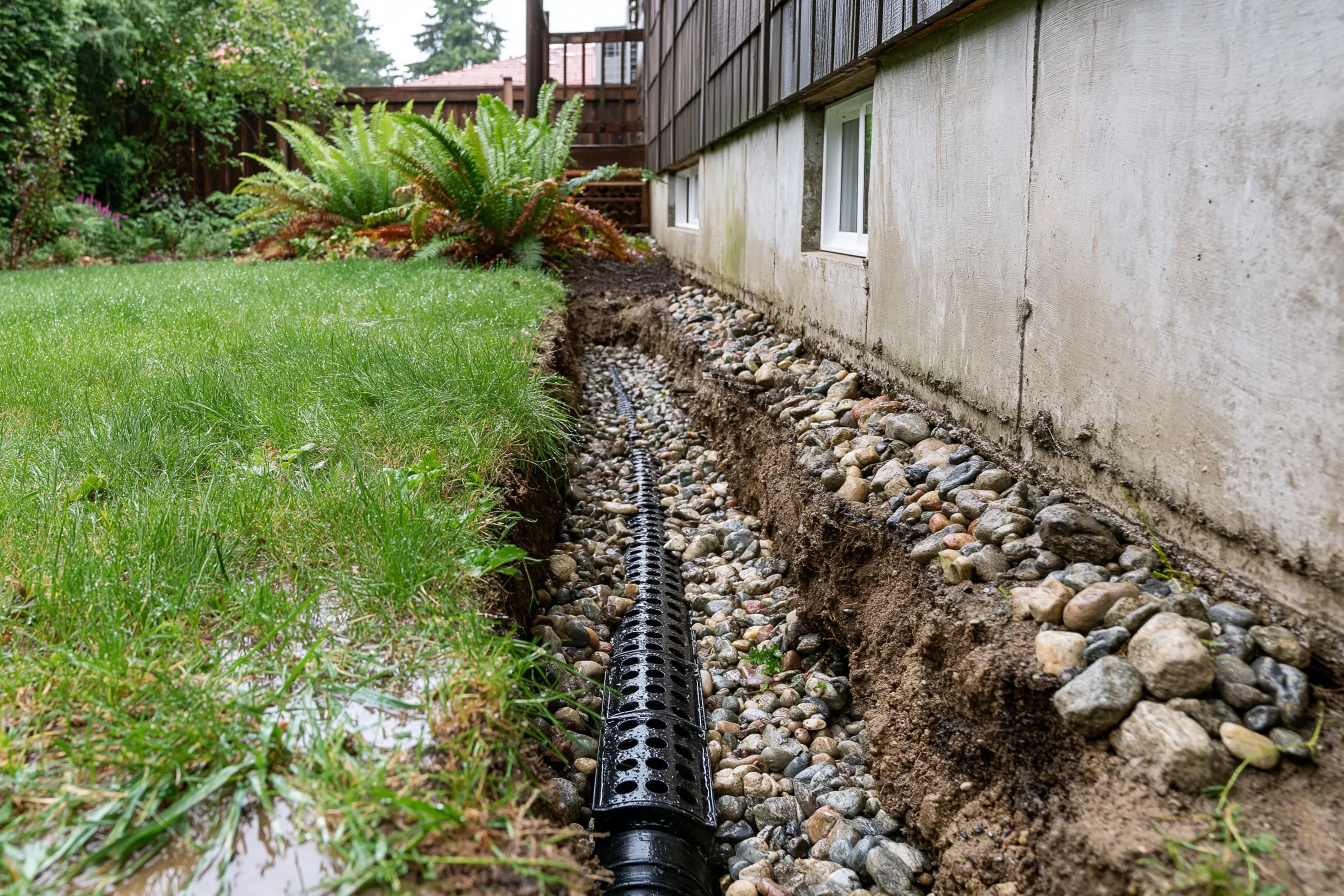
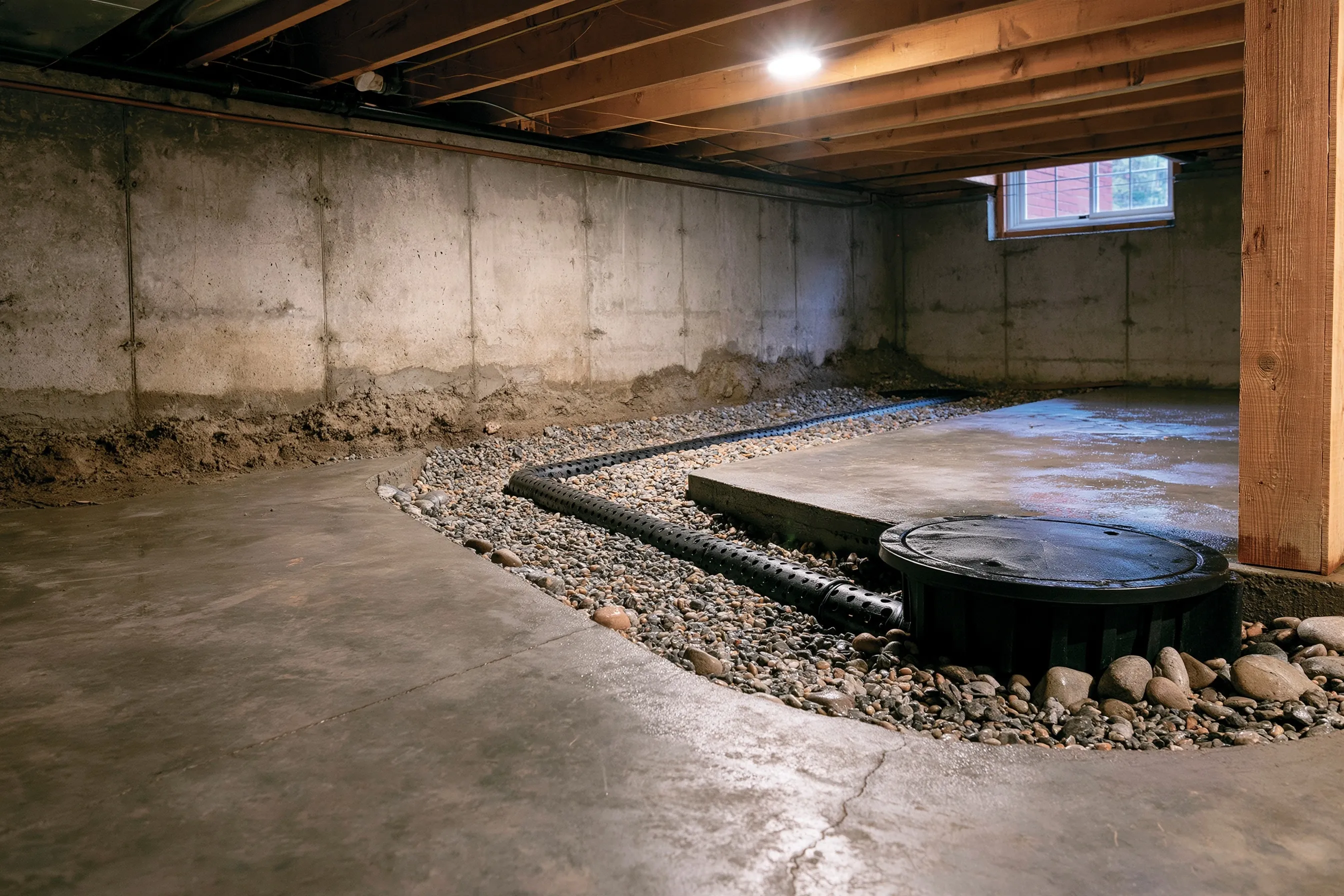
An outside drain is a perforated pipe in washed gravel beside the footing, catching water before it reaches the wall; it means digging along the foundation, so decks, steps, plantings and paving are involved. An inside drain follows the base of the wall in a gravel channel to a sump that pumps the water out.
The two are not the same job, and neither answers a question about the soil. Whether a drain is required depends on the building code in force for the house; the permit center or your engineer can confirm it.
Check these before spending on a drain. Gutters that overflow, downspouts that empty beside the wall and soil that slopes toward the house put water at the foundation, and Building America guidance names bulk water from improper grading, missing perimeter drainage and gutters as the dominant source of moisture in vented crawlspaces. A downspout joined to a line that carries the water away from the wall is a first step.
On a sloped lot the place where the water leaves the downspout matters too, because it can erode the ground it lands on or flow onto a neighbor.
Retaining walls are a different job from foundation drainage. Redmond’s miscellaneous building permit packet, which covers retaining walls among its listed items, for the permit types it lists asks for drawings and calculations stamped by a Washington State engineer. If water at a foundation is coming from behind a retaining wall, the wall may need an engineer before any drain does.
Redmond’s handout on geologic hazard areas says altering an erosion hazard area may happen when a geotechnical analysis shows no increase in surface water discharge or sedimentation to adjacent properties beyond pre-development conditions, no decrease in slope stability and no adverse impact to other critical areas. The handout is dated 2011, so check the current code, and call the city before regrading or sending water downhill.
Price follows the length of drain, whether it goes inside or outside, the depth of the footing, what must be dug up or removed and put back, the sump and discharge route, and whether the water has anywhere to go by gravity. Gutter and downspout work is separate from a footing drain. Quotes come after the foundation and the water have been seen.
Where a Redmond lot is steep enough to be classed as a landslide hazard area, the city’s critical areas maps show it, and the handout says alteration of a landslide hazard area is prohibited except for streets and utilities adopted as part of a City plan, so ask the city before any digging or regrading there. Where water leaves a downspout or a drain matters more on a slope, and it is the part of the job the city may care about.
A contractor working in Redmond needs the city business license the permit packet describes; that is separate from a permit for the work itself.
Not always. Building America points to grading, missing perimeter drainage and gutters as the dominant moisture source in vented crawlspaces, so those get fixed first; a drain is for water that still gathers afterward.
Where the water is, and what surrounds the foundation, decide. An outside drain stops water before it reaches the wall but means digging along the house; an inside drain leaves the yard alone and handles water that has already arrived.
According to HUD, yes: water can wash fine soil from beneath a footing and weaken the soil’s grip. So a settlement job looks at water as well as piers.
Managing water is separate from assessing what it has already damaged. Shifted ground goes with foundation settlement and piering; soft framing goes with crawlspace post and beam repair. Visit the Redmond Foundation Repair home page for the complete service list.
Where does the water show up and when: after rain, all winter or all year? Say whether it is in a crawlspace, a basement or the yard, whether gutters and downspouts are connected to a drain line, and whether the lot slopes toward the house. We'll get back to you soon with an estimate or any questions we have. Estimates are free and there's no obligation.
Call (425) 534-7222